What Happens to Your Body When You Pray Before Bed (The Science Will Surprise You)
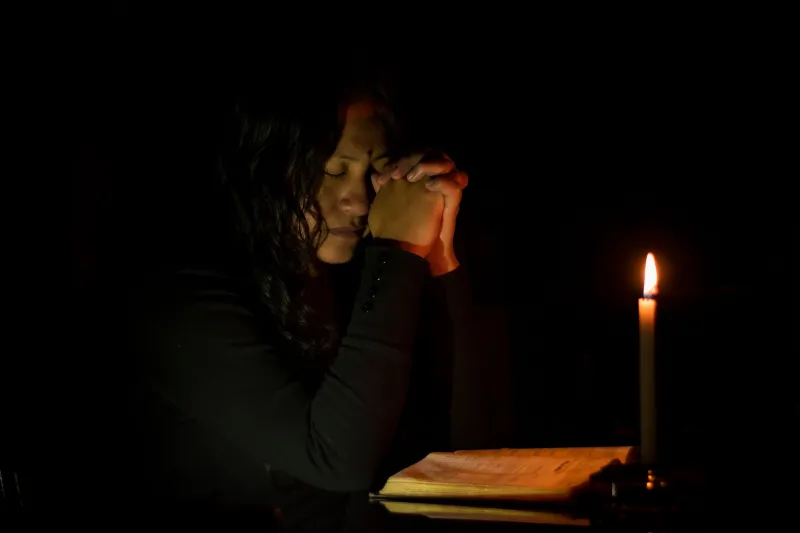
Your Bedroom Might Be Your Most Sacred Space
Most of us treat sleep like a task — something to squeeze in between the chaos of daily life. We scroll, we stress, we replay the day's mistakes on a mental loop, and then we wonder why we wake up exhausted. But what if the missing ingredient in your sleep routine wasn't a new pillow or a fancy supplement? What if it was something a lot older than that?
For millions of Americans, faith is already woven into the fabric of daily life. Church on Sundays. Grace before dinner. A quiet moment of prayer before the kids wake up. But bedtime? That's often where spiritual practice gets dropped — right when it might matter most.
Researchers and sleep specialists are increasingly paying attention to what happens when people bring intentional spiritual practice into their pre-sleep routine. And honestly? The data is kind of beautiful.
The Cortisol Connection: How Faith Calms Your Nervous System
Here's the basic biology. When you're stressed, your body pumps out cortisol — the hormone responsible for that wired, can't-wind-down feeling that keeps you staring at the ceiling at 11 PM. High nighttime cortisol is one of the most common culprits behind poor sleep quality, and in our always-on culture, most Americans are running on chronically elevated stress hormones.
Prayer and meditation — especially the contemplative, slow-breath kind — have been shown in multiple studies to activate the parasympathetic nervous system. That's your body's "rest and digest" mode, the biological opposite of fight-or-flight. A 2015 study published in JAMA Internal Medicine found that mindfulness meditation (which shares significant overlap with contemplative prayer practices) significantly improved sleep quality in older adults with moderate sleep disturbances.
Dr. Lisa Miller, a psychologist at Columbia University and author of The Awakened Brain, has spent years studying the neuroscience of spirituality. Her research suggests that people with an active spiritual life show measurably different brain activity — particularly in regions associated with stress regulation and emotional resilience. "Spiritual awareness," she's noted, "is literally protective."
Protective, as in: your brain on faith may simply handle nighttime anxiety better than your brain without it.
Gratitude Journaling: The Five-Minute Practice That Changes Everything
If you've never tried gratitude journaling before bed, this is your sign. It sounds almost embarrassingly simple, but the research behind it is solid.
A study out of the University of Manchester found that people who wrote about things they were grateful for before bed fell asleep faster and slept longer than those who didn't. The theory? When you intentionally redirect your attention toward what's good — what you're thankful for, what felt like grace today — you interrupt the anxious thought spirals that hijack sleep.
For faith-based folks, this practice takes on an extra dimension. Gratitude journaling becomes an act of acknowledgment — a way of saying, I noticed you today. Whether you're thanking God, the universe, or simply the goodness that showed up unexpectedly, the ritual creates a soft landing for your mind.
Try this tonight: Before you turn off the light, write down three specific things from your day that felt like a gift. Not vague stuff — specific moments. The way your coffee tasted. A text from a friend you hadn't heard from in months. A parking spot that opened up exactly when you needed it. Specificity is what makes this work.
Bedtime Prayer as a Transition Ritual
Sleep researchers talk a lot about "sleep hygiene" — the habits and cues that signal to your brain that it's time to shift from wakefulness to rest. A consistent pre-sleep routine is one of the most effective tools in the sleep specialist's toolkit.
Prayer, it turns out, is a nearly perfect transition ritual. It's quiet. It's repetitive in a comforting way. It naturally slows the breath. And for people of faith, it carries the added weight of meaning — a conscious act of releasing the day's burdens into something larger than yourself.
Pastor and author Tish Harrison Warren writes beautifully about the practice of compline — the ancient Christian night prayer — as a way of "giving the day back to God." There's something profoundly restful about that framing. You don't have to carry it anymore. You can put it down.
If formal liturgical prayer isn't your thing, even a simple, personal conversation — spoken aloud or in your head — can serve the same function. The content matters less than the intention: I'm handing this over. I'm done holding it for today.
Guided Prayer Meditation: A Modern Take on an Ancient Practice
For those who find it hard to quiet the mental chatter, guided prayer meditation is worth exploring. Apps like Hallow (which is explicitly Christian-focused) and Insight Timer (which includes faith-based content alongside secular meditation) offer guided sessions specifically designed for bedtime. These often combine breathwork, scripture or spiritual reflection, and gentle visualization — a kind of bridge between traditional prayer and modern mindfulness.
The beauty of guided sessions is the structure. You don't have to generate the calm yourself; you just follow the voice. And for people who've struggled with meditation because their mind won't cooperate, that scaffolding can be genuinely life-changing.
A Simple Bedtime Ritual You Can Start Tonight
You don't need to overhaul your entire evening. Start small. Here's a gentle framework:
30 minutes before bed: Put the phone down. Seriously. The blue light disrupts melatonin production, and the content — news, social media, emails — keeps cortisol elevated.
20 minutes before bed: Spend five minutes with your gratitude journal. Three specific things. That's it.
10 minutes before bed: Settle into a comfortable position and spend a few minutes in prayer or guided meditation. Let your breath slow. Release the day consciously — name what you're carrying and set it down.
As you drift off: Many people find it helpful to repeat a simple phrase or scripture as a kind of mantra. Something like "I am held" or "Peace, be still" — whatever resonates with your tradition and your heart.
Rest Is an Act of Faith
Here's something worth sitting with: in a culture obsessed with productivity, choosing to rest is almost countercultural. It requires trust — trust that the world will keep spinning while you sleep, that tomorrow will take care of itself, that you don't have to hold everything together through sheer force of will.
That's faith, in one of its most practical forms.
Your bedroom can be a sanctuary. Your nightly routine can be a spiritual practice. And the sleep you've been chasing might be closer than you think — just on the other side of letting go.