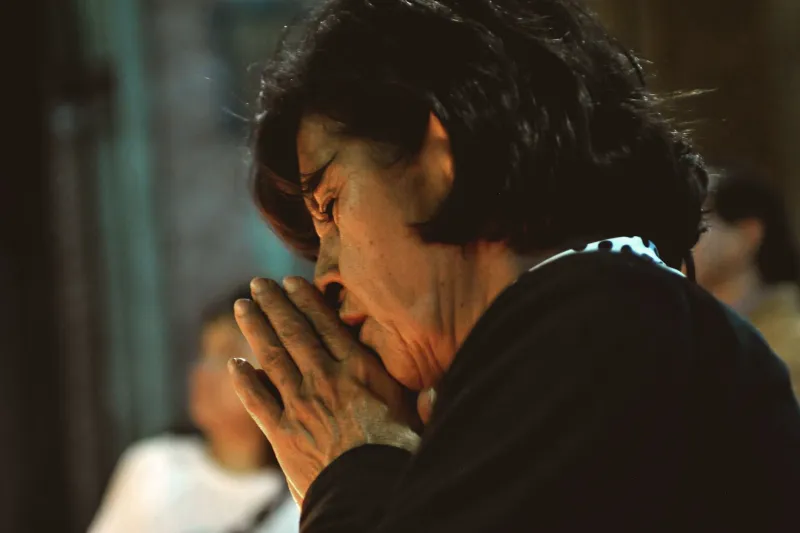
Tight Chest, Clenched Jaw, Raised Shoulders: Your Body Is Preaching a Sermon You Haven't Heard Yet

The Breath You Never Finished Taking
Here's a small experiment. Right now, wherever you're reading this, notice your shoulders. Are they creeping up toward your ears? Now unclench your jaw — because there's a good chance it was clenched. Take a full, slow breath and notice whether your chest actually opens or whether it hits a wall somewhere around your sternum.
If any of that felt unfamiliar, you're not alone. Millions of Americans are walking around in a state of low-grade, chronic physical bracing — and most of them have no idea it's happening. We chalk it up to stress, bad ergonomics, too many hours at the desk. And sure, those things are real. But there's another layer worth sitting with: sometimes the tension in your body is a direct transcript of what's happening in your spirit.
That's not a metaphor. That's physiology.
What Spiritual Resistance Actually Does to Your Nervous System
Your nervous system doesn't separate the emotional from the physical. It doesn't know the difference between a threat you can see and one you're quietly carrying in your heart — the fear that God has forgotten you, the doubt that things will ever shift, the resentment you've been politely suppressing for three years.
When you resist — whether that's resisting surrender, resisting grief, resisting the vulnerability of real faith — your body interprets that internal bracing as danger. The sympathetic nervous system kicks on. Muscles tighten. Breathing becomes shallow. The diaphragm, that big beautiful dome of muscle that's supposed to pull air deep into your lungs, barely moves.
Over time, this becomes a default setting. Researchers in the field of somatic psychology, including the work built on Peter Levine's trauma studies and Bessel van der Kolk's body-based research, have documented how unprocessed emotional and spiritual tension lodges in specific physical locations — and the chest, jaw, and shoulders are among the most consistent.
Think about the last time you braced for bad news. Where did your body go first? Probably right there.
The Armor We Put On Without Knowing It
There's a concept in somatic therapy called body armor — the idea that the muscles develop a kind of protective rigidity in response to repeated emotional pain or suppression. It's not weakness. In fact, it's the body being incredibly smart on your behalf. It learned, somewhere along the way, that holding tight kept you safe.
But here's the spiritual wrinkle: a lot of that armor gets built during seasons of faith struggle.
When you're not sure God is listening and you're too afraid to say it out loud, you hold your breath. When you're sitting in a pew or on a Zoom church call and you're nodding along but internally screaming I don't know if I believe this anymore, your jaw locks down. When you've been waiting — really waiting, the kind that hollows you out — and you've decided that showing how desperate you are is too risky, your shoulders climb north and stay there.
None of this is conscious. That's the part that makes it so sneaky.
Three Places Your Spirit Hides in Your Body
The chest and diaphragm. This is where grief, longing, and suppressed prayer live. Shallow breathing is almost always a sign that something emotional is being held at arm's length. Spiritually, the chest is where we feel the ache of disconnection — from God, from community, from our own sense of purpose. When surrender feels impossible, the diaphragm literally stops doing its job fully.
The jaw and throat. The jaw clenches when we swallow words. The throat tightens when we're not speaking our truth — whether that's a hard conversation we've been avoiding, a prayer we're too afraid to pray out loud, or a doubt we've decided is too shameful to voice. There's a reason so many spiritual traditions connect the throat with authentic expression. When that expression gets blocked, the body contracts around it.
The shoulders and upper back. This is where we carry what we believe is ours to carry alone. The weight of responsibility, the exhaustion of trying to hold everything together, the quiet refusal to let anyone — including God — actually help. Elevated, tight shoulders are almost universally associated with the sense of being overwhelmed and unsupported. They are the posture of someone who has decided, consciously or not, that they cannot afford to let down their guard.
What Breathwork Has to Do With Faith
Here's where it gets interesting — and maybe a little inconvenient.
The single most direct way to interrupt the sympathetic nervous system's grip on your body is through your breath. Specifically, slow, extended exhales activate the vagus nerve, which is the superhighway of your parasympathetic nervous system — the rest-and-digest, calm-and-connect system. A long exhale literally signals your brain that you are safe enough to let go.
In spiritual terms, that's surrender. Not the passive, defeated kind. The active, courageous, I am releasing my grip on this kind.
Many contemplative traditions have known this for centuries. The ancient Hebrew word ruach means both breath and spirit. The Greek pneuma does the same double duty. The breath has always been tied to the divine — and maybe that's not poetic coincidence. Maybe it's a design feature.
When you consciously breathe — when you let your belly expand, your chest open, your jaw unclench — you are practicing, in a very physical way, the thing that spiritual growth asks of you over and over again: the willingness to stop holding everything together by yourself.
A Simple Practice to Start With
You don't need a meditation app or a yoga studio. You just need a few minutes and a willingness to be honest with your own body.
Sit or lie down somewhere quiet. Place one hand on your chest and one on your belly. Breathe in slowly through your nose for a count of four. Then exhale — really exhale, let it all the way out — for a count of six or eight. Do this for five minutes.
While you breathe, pay attention to what comes up. Tightness in the chest might be grief or longing. A locked jaw might be a conversation you need to have — maybe with God, maybe with someone else. Shoulders that won't drop might be an invitation to ask: What am I carrying that was never mine to carry alone?
You don't have to solve anything in those five minutes. You just have to notice. The noticing is where healing starts.
Your Body Is Not Betraying You
If you've been walking around tight and breathless and you didn't know why, this isn't a diagnosis of spiritual failure. It's actually evidence of how hard you've been trying — how much you've been holding, how faithfully you've been showing up even when it cost you.
But your body is ready to tell you something your mind has been too busy to hear. And the message is pretty simple: You can exhale now. You can open. You can let something in.
Sometimes the most spiritual thing you can do is take a full breath and mean it.