When Church Hurts More Than It Heals: The Hidden Health Cost of Belonging to the Wrong Kind of Community
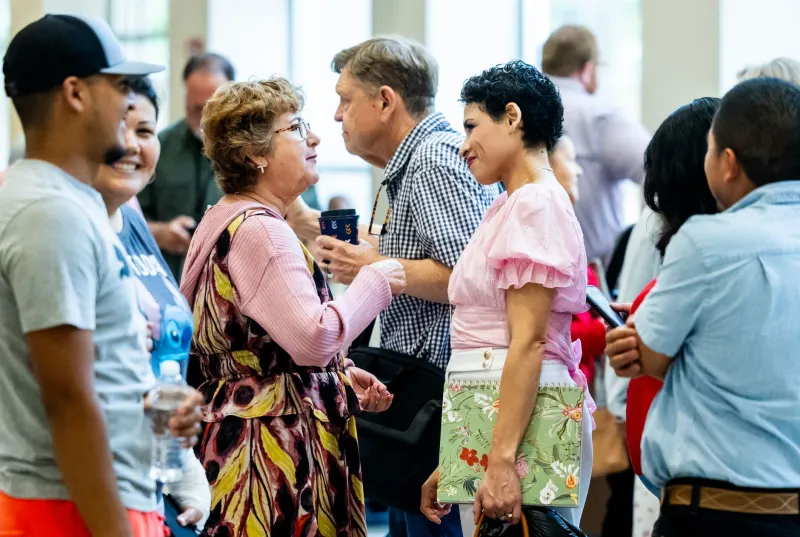
Let's be honest about something most wellness articles won't touch: you can attend church every single Sunday, serve on three committees, show up to every potluck, and still feel profoundly, achingly alone.
And that kind of loneliness — the kind that wears a smile and knows all the right words — might actually be more damaging to your health than the kind that admits it needs help.
Loneliness Is a Public Health Crisis. Religious Communities Are Not Immune.
The U.S. Surgeon General declared loneliness a public health epidemic in 2023. The research backing that declaration is sobering: chronic loneliness carries health risks comparable to smoking 15 cigarettes a day. It raises your risk for heart disease, stroke, dementia, and premature death. It suppresses immune function, elevates cortisol, and keeps your nervous system in a state of low-grade threat response.
The assumption has always been that religious community offers a natural buffer against all of this. And it can. Studies consistently show that people with strong, authentic social connections within faith communities live longer, recover from illness faster, and report higher overall wellbeing.
But there's a catch buried in that research that doesn't get nearly enough attention: the quality of those connections matters enormously. Showing up to the same building every week doesn't automatically create the kind of belonging your body needs to heal. Sometimes it creates the opposite.
The Performance Problem
Here's what a lot of American church culture has quietly built: an environment where you come on Sunday to be seen doing well. Where vulnerability is theoretically welcomed but practically penalized. Where the unspoken rules are: have your testimony sorted out, don't bring your mess too close to the surface, and for heaven's sake, don't let anyone see you doubting.
That pressure to perform spiritual wellness is not neutral. It's physiologically costly.
When you're in a social environment where authenticity feels unsafe — where you're constantly monitoring what you say, how you look, whether you're measuring up — your nervous system reads that as threat. Not the dramatic kind, but the chronic, low-grade kind that never quite lets you exhale. Your body doesn't distinguish between a lion in the grass and a congregation where you're afraid to be real. Both keep you on guard. Both keep you from healing.
Dr. Brené Brown's research on shame and vulnerability has shown consistently that environments characterized by judgment and perfectionism don't just feel bad — they isolate people at a cellular level by preventing the kind of genuine connection that regulates the nervous system. When belonging is conditional, it isn't really belonging at all. And your body knows the difference.
The Specific Wound of Religious Isolation
There's something uniquely painful about feeling alone in a community that is explicitly organized around love, grace, and togetherness. It creates a dissonance that's hard to name and harder to resolve.
Many people internalize it as personal failure. If I were more faithful, I'd feel more connected. If I were less broken, I'd fit better. That narrative is not just spiritually harmful — it's a direct line to shame, and shame is one of the most inflammatory emotional states the human body can carry.
Research from the University of British Columbia found that social pain — the pain of rejection, exclusion, or feeling like you don't belong — activates the same neural pathways as physical pain. Your brain isn't being dramatic when church leaves you feeling hurt. It's reporting an injury.
And unlike a sprained ankle, this injury often goes unnamed, untreated, and compounded week after week.
What Authentic Belonging Actually Requires
The early church, as described in Acts, was characterized by something almost countercultural even then: people sharing what they had, eating together, confessing their needs, and showing up for each other's actual lives — not their highlight reels. The Greek word koinonia, often translated as "fellowship," carries connotations of radical participation and mutual sharing. It's not a coffee hour. It's not a small group where everyone gives safe answers.
True koinonia is the kind of belonging where you can say I'm not okay and have someone stay in the room with you.
For your body, that kind of connection triggers the release of oxytocin — sometimes called the "bonding hormone" — which directly counters cortisol, reduces inflammation, and lowers blood pressure. It activates your vagus nerve, the long wandering nerve that connects your brain to your gut, heart, and lungs, and that is central to your body's ability to rest, repair, and regulate.
You cannot manufacture that response in a room full of polished performances. It requires safety, honesty, and the willingness to be known.
Asking the Harder Questions
If you're part of a faith community, it might be worth sitting with some uncomfortable questions:
Do you feel freer or more guarded after a Sunday service? If you consistently leave feeling like you didn't quite measure up, that's worth paying attention to.
Is there anyone in your community who knows your actual struggles? Not your sanitized prayer requests, but the real thing — the marriage that's strained, the anxiety that won't quit, the faith that's gone dry?
What happens when someone in your community falls apart? Are they embraced or quietly distanced? The answer tells you everything about whether belonging is real or conditional.
None of this means walking away from your community. It might mean becoming the person who changes the culture — who goes first with honesty, who creates space for others to be real, who redefines what showing up actually means.
Your Body Is Waiting for Real Community
The loneliness epidemic will not be solved by more church attendance. It will be solved by more church authenticity — by communities willing to get uncomfortable enough to be genuinely present with each other.
Your nervous system doesn't need a pew. It needs a witness. Someone who sees you — really sees you — and stays. That's what heals the body. That's what Scripture has been describing all along.
If you haven't found that yet, keep looking. Keep asking. And in the meantime, be that for someone else. The biology of belonging works in both directions — giving genuine presence heals you just as surely as receiving it.