What Your Bedroom Is Saying About How Much You Think You're Worth
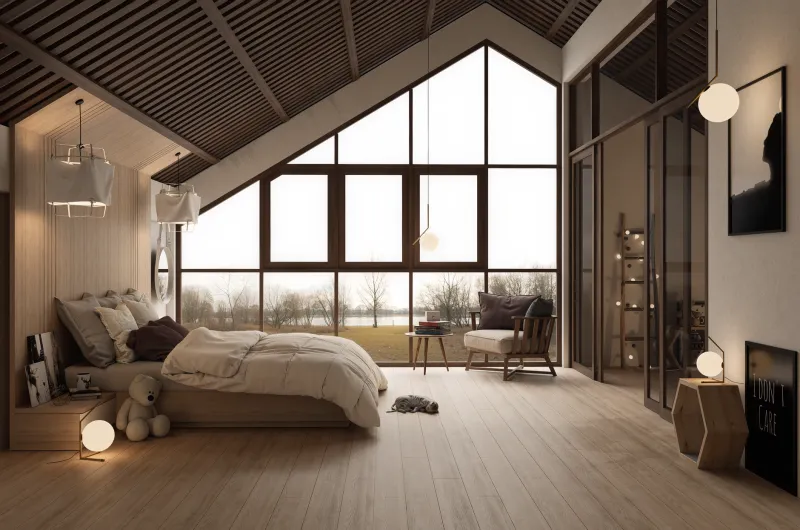
The Room You Come Home To Every Night
Most of us don't think twice about the bedroom. It's where we crash, where we scroll, where we finally surrender to sleep after a long day. But here's a thought worth sitting with: the way you've designed — or neglected — that space reflects something deeper than your decorating preferences. It reflects how much you believe you deserve rest, peace, and care.
That's not an accusation. It's an invitation.
Interior design psychology has long argued that our environments are both shaped by and actively shape our emotional states. But when you layer in a faith-based lens, something even more interesting happens. The condition of your bedroom becomes less about aesthetics and more about theology — specifically, what you actually believe about your own value.
Clutter Is More Than Just Mess
Let's start with the stuff. The stack of unopened mail on the nightstand. The clothes draped over the treadmill you never use. The box from a move two years ago that you still haven't unpacked. Sound familiar?
Clutter, research tells us, raises cortisol levels — the body's primary stress hormone. A 2010 study out of UCLA found that women who described their homes as cluttered had measurably higher cortisol throughout the day than those who described their spaces as restful. That's not a small thing. Chronic cortisol elevation messes with your sleep quality, your immune function, your digestion, and your mood.
But spiritually? Clutter often signals something else. It can be the physical manifestation of postponed self-care — the belief, even if unconscious, that you'll get around to taking care of yourself later. That you're not quite worth the effort today. That your comfort is a project you haven't gotten to yet.
Many faith traditions hold that your body is a sacred dwelling — a temple, a vessel, a gift you've been entrusted to steward. If that's true, then the room where that body rests and restores deserves some reverence. Not perfection. Just intention.
What Your Lighting Is Actually Doing to You
Here's one most people overlook: lighting. Specifically, the harsh overhead fluorescent-style bulbs that flatten everything and make a bedroom feel like a break room. Or the phone screen that's the last thing you look at before you close your eyes.
Melatonin — the hormone your brain releases to signal that it's time for sleep — is suppressed by blue light. This is well-established science. But there's a gentler truth hiding underneath the biology: the quality of light you surround yourself with at night communicates something to your nervous system about safety and ease.
Warm, dim light tells your body you can slow down now. Harsh, bright light tells it stay alert. And if you've never bothered to swap out a bulb or pick up a lamp that creates a softer glow, it's worth asking — gently, without judgment — why not. Do you believe you deserve a space that feels like a haven?
Faith-based self-care isn't about luxury. It's about honoring what's been given to you. A $12 warm-toned bulb from the hardware store can be an act of worship if it comes from a place of believing your rest matters.
Color, Calm, and the Theology of Beauty
Color psychology is a real thing, and it matters in the bedroom. Cool, muted tones — soft blues, warm whites, sage greens, gentle lavenders — have been shown to lower heart rate and support a sense of calm. Deep, saturated colors can energize, which is great for a living room and not so great for a sleep space.
But here's the spiritual angle: beauty is not vanity. There's a long tradition across many faith communities — from cathedral builders to Japanese Zen garden designers to the makers of handwoven prayer rugs — that beauty is a form of reverence. Creating a space that is genuinely pleasant to exist in isn't self-indulgent. It's an acknowledgment that the one who lives there is worth something.
You don't have to redecorate from scratch. Even one small change — a calming print on the wall, a soft throw blanket in a color that makes you exhale, a candle that smells like something gentle — can begin to shift the energetic story your bedroom is telling.
The Chair That Holds Everything But You
Almost every bedroom in America has one. The chair — or corner, or floor space — where everything lands that doesn't have a home. Gym bags, work bags, yesterday's outfit, tomorrow's to-do list in physical form.
That chair is a boundary issue as much as a clutter issue. It represents the way we let the demands of our waking life bleed into the space that's supposed to be set apart for rest. And boundaries, as any good faith-based counselor will tell you, are not walls — they're acts of love. Love for yourself. Love for what you need. Love for the kind of rest that actually restores you.
Clearing that chair — even once, even imperfectly — is a small act of saying: this space is for me. Rest belongs here. I am allowed to have a place that is separate from my obligations.
Intentional Design as a Spiritual Practice
You don't need a Pinterest board or a designer or a big budget to make your bedroom a sanctuary. What you need is intention. The willingness to look at the space where you sleep and ask: does this reflect how I want to treat the person who lives here?
Maybe that means making your bed in the morning — not because someone told you to, but because returning to a made bed at night feels like a small act of self-respect. Maybe it means putting your phone to charge across the room instead of on the nightstand, giving your mind the message that this time is truly yours. Maybe it means finally hanging the curtains that have been sitting in a bag since last spring.
None of these things are grand gestures. But they are, cumulatively, a declaration. A declaration that your rest is worth protecting. That your body is worth caring for. That you, in all your ordinary, tired, beautiful humanness, deserve a place that says welcome home.
You Are Worth a Room That Loves You Back
Here's the bottom line: the state of your bedroom is not a moral failing. It's information. It's an invitation to ask yourself what you actually believe about your own worthiness — and to let that belief evolve.
Faith, at its core, is about being known and loved not because of what you've done or how together your life looks, but simply because you exist. That kind of love doesn't wait until you've earned a beautiful space. It shows up in the middle of the mess and says — you're worth more than this.
So start small. Clear one surface. Change one bulb. Bring in one thing that makes you feel cared for.
Because the room where you rest is the room where you heal. And you deserve both.