Sunday Night Restlessness Is Your Soul Talking — Are You Listening?

The 7 p.m. Dread Is Real — And It's Not Just in Your Head
You know the feeling. The sun starts to set on Sunday, your stomach tightens, and suddenly the weekend that felt so full of possibility is slipping through your fingers like sand. Your mind starts running through Monday's calendar. Your chest gets a little heavier. Sleep, when it finally comes, feels restless and thin.
America has a name for this now: the Sunday Scaries. And according to a LinkedIn survey, over 80% of Americans report experiencing it regularly. But here's what most wellness articles miss entirely — this isn't just an anxiety problem. For a lot of people, it's a spiritual one.
When your soul hasn't been fed, your body is the first to let you know.
Your Spirit Runs on Rhythms, Too
Most of us understand that our bodies need routine. Sleep schedules, meal times, exercise — we know these things matter. But we don't always extend that same logic to our inner life. The truth is, your spirit operates on rhythms just as much as your circadian clock does.
Across nearly every major faith tradition — Christianity, Judaism, Islam, Buddhism — there's a built-in concept of sacred rest. The Jewish Sabbath, the Christian Sunday, the Islamic Jumu'ah — these weren't arbitrary calendar events. They were designed to interrupt the relentless forward motion of life and create a container for reflection, gratitude, and reconnection with something bigger than your to-do list.
When we skip that reset — or when we fill Sunday with errands, screens, and low-grade productivity — we arrive at Sunday night spiritually depleted. And a depleted spirit doesn't sleep well. It ruminates. It catastrophizes. It lies awake at 2 a.m. rehearsing conversations that haven't happened yet.
What's Actually Happening in Your Nervous System
Here's where faith and science start speaking the same language. Chronic anticipatory anxiety — which is exactly what the Sunday Scaries are — activates your body's sympathetic nervous system, the one responsible for fight-or-flight. Cortisol rises. Heart rate increases slightly. Your brain starts scanning for threats.
This is your biology doing its job. The problem is that your nervous system can't tell the difference between a real threat and an imagined Monday morning meeting. It responds to both the same way.
What can interrupt that cycle? Practices that activate the parasympathetic nervous system — the rest-and-digest counterpart. Deep breathing, gratitude, prayer, stillness, meaningful connection. Sound familiar? These are the building blocks of most spiritual practices, and they're also exactly what neuroscience says your overwhelmed body needs on a Sunday night.
This isn't a coincidence. It's a design feature.
Signs Your Sunday Anxiety Has a Spiritual Root
Not every case of Sunday dread is purely spiritual — sometimes it's a signal that your job genuinely isn't right for you, or that boundaries need to be set. But there are some specific signs that your soul, not just your schedule, needs attention:
- You feel disconnected, not just stressed. There's a flatness to the week that goes beyond being tired.
- Rest doesn't feel restful. You had a full weekend but still feel empty.
- You're running on obligation, not purpose. The week ahead feels like something to survive rather than something to engage with.
- You haven't been still — really still — in days. No quiet, no prayer, no moment of genuine reflection.
If any of those land, keep reading.
A Sunday Evening Reset That Feeds Both Body and Soul
The goal here isn't to add another thing to your already-full plate. It's to shift the quality of how you close out the week. Think of it less as a routine and more as a ritual — something intentional, something that signals to both your nervous system and your spirit that it's okay to exhale.
Start with a gratitude review, not a task review. Most of us spend Sunday night mentally previewing the week ahead. Try spending five minutes looking backward instead. What happened this week that you're genuinely grateful for? It doesn't have to be big. A good cup of coffee counts. A kind text from a friend counts. This practice literally shifts brain chemistry, increasing serotonin and pulling your focus out of the anxiety spiral.
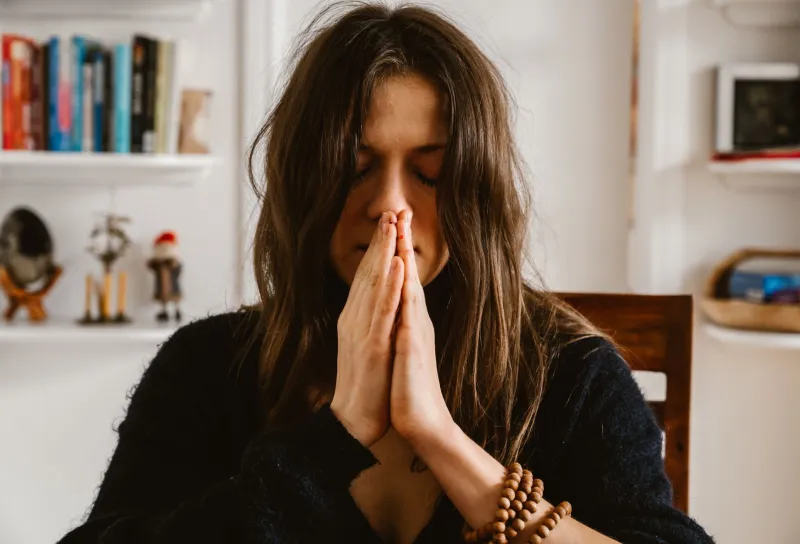
Create a simple closing prayer or intention. It doesn't need to be formal or long. Even something as simple as "I release this week. I trust what's ahead. I am held." — said aloud, with intention — can function as a nervous system cue that the week is over and the next one hasn't started yet. You are in between, and that space is sacred.
Try evening journaling with a faith-based prompt. Instead of journaling about everything you're anxious about (which can sometimes amplify worry), try prompts like: Where did I feel most like myself this week? Where did I feel grace, even in a hard moment? What do I want to carry into the week ahead — not do, but carry?
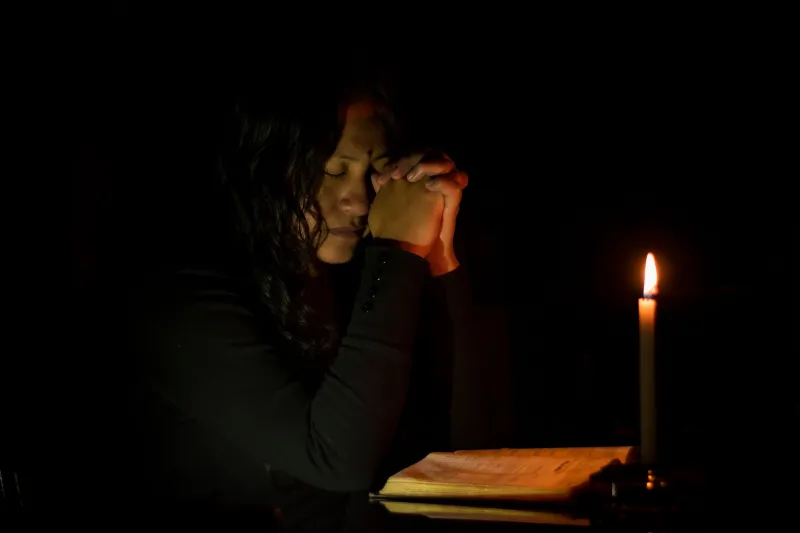
Make Sunday night a sensory experience. Your body needs signals that it's safe to wind down. Light a candle. Make herbal tea. Put your phone in another room. Play something quiet — instrumental worship music, ambient sounds, whatever settles you. These aren't indulgences. They're nervous system medicine.
End with a bedtime affirmation rooted in your faith. Something like: "I don't have to have it all figured out. I am enough for what tomorrow asks of me. I can rest." Say it slowly. Say it like you mean it, even if you don't fully believe it yet. Repetition is how the brain learns new defaults.
Rest Is an Act of Trust
Here's the deeper spiritual truth underneath all of this: the Sunday Scaries are, at their core, a trust issue. When we can't rest on Sunday night, we're often operating from a belief — conscious or not — that everything depends on us. That if we let go, even for eight hours, something will fall apart.
Faith, in almost every tradition, pushes back against that belief. Rest is built into the fabric of creation not because it's earned but because it's necessary. You were not designed to carry the week before it begins.
Your soul knows this. That's why it gets restless when you ignore it.
So this Sunday, instead of white-knuckling your way through the evening, try something different. Light a candle. Say a prayer. Write three things you're grateful for. Tell your nervous system — and your spirit — that it's okay to lay it down for the night.
Monday will come regardless. You might as well meet it rested.